
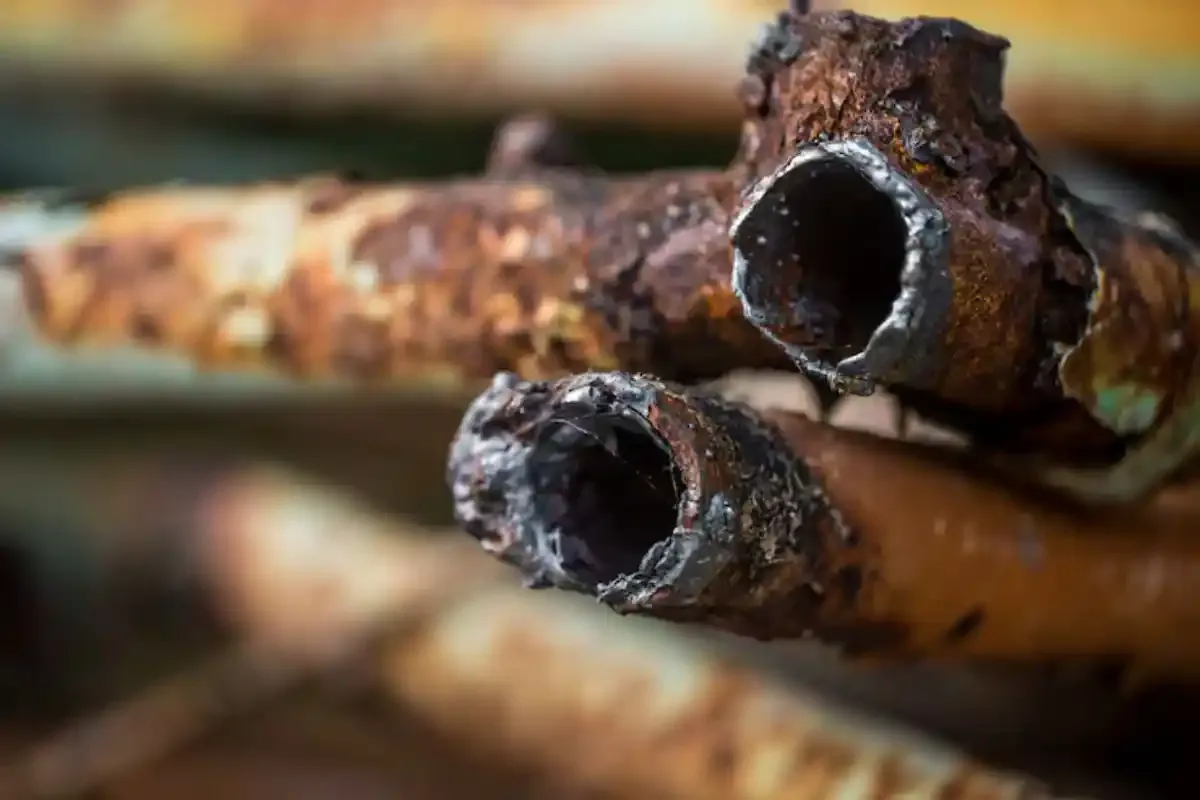
The first hour after you find a burst.
Close the main water shutoff.
It is usually where the line enters the house. Turn it clockwise until it stops.
Open taps and drain the lines.
Open the lowest tap to drain. Flush a toilet once to empty the tank.
Shut off power to wet areas.
If water is near outlets or the panel, switch off the breakers from a dry spot.
Photograph everything.
Take photos and a short video of the burst, the water and the damage.
Call a plumber.
Tell the person on the phone where the pipe is and whether water is still running.
Why freezing breaks a pipe.
Water expands by about nine percent when it freezes. Ice forms first in the middle of a run and creates a plug. As more ice forms, pressure builds between the plug and a closed faucet. The pipe splits at its weakest point, which is often a short distance from the ice itself.
The split may be hidden until the ice melts. A pipe that was dry the night before can become a steady stream by noon. The risk is highest in pipes along exterior walls, in unheated crawlspaces, garages and attics, and under kitchen sinks on outside walls.
Pipe burst or frozen right now? Shut off the main and call. Call and we talk it through.
Call (855) 575-2890Safe and unsafe ways to thaw a pipe.
Only thaw a pipe that has not cracked, and keep the shutoff ready.
| Method. | Safe? | Notes. |
|---|---|---|
| Hair dryer on low. | Yes. | Start near the tap and work back toward the frozen section. |
| Warm towels. | Yes. | Wrap and replace as they cool. |
| Space heater nearby. | With care. | Keep it away from anything that can burn and never leave it unattended. |
| Heat gun on low. | With care. | Keep it moving to avoid scorching. |
| Propane torch or open flame. | No. | Fire risk and it can melt solder joints. |
| Hot water poured on the pipe. | No. | Can crack a cold pipe and flood. |
How a plumber repairs a burst.
A burst in a single spot is cut out and replaced. On copper we sweat in new pipe or use push-fit couplings. On PEX we replace the damaged section with crimp or expansion fittings. On CPVC we replace the length and check the neighbors.
We test the whole run before we turn the water back on. A pipe that split once from freezing often has weakened neighbors, so we look at the adjacent pipe and the fittings. If several are damaged, a larger replacement run costs less than repeated visits. See burst pipe repair for the full process.
The water after the burst.
Standing water in a basement or crawlspace is the larger problem. Remove it quickly and run fans and a dehumidifier. Wet insulation and drywall hold moisture and grow mold in days.
We repair the pipe. A restoration company dries the structure. If the water is deep, do not enter a basement with live electrical outlets or an energized panel.
Prevention before the next cold snap.
These steps reduce the risk.
- Insulate pipes in crawlspaces, garages and exterior walls..
- Open cabinet doors under sinks on exterior walls on the coldest nights..
- Let a faucet drip in the lines most at risk. A slow drip keeps water moving..
- Disconnect garden hoses and shut off outdoor spigots before the first hard freeze..
- Keep the thermostat set no lower than about 55 degrees when you travel..
- Know where your main shutoff is and make sure it turns..
When the frozen line is underground.
If the water stops at the meter or the line between the meter and the house is frozen, the problem is underground. Thawing or repairing a buried line needs excavation or specialized equipment, and a call to the one-call center first.
A frozen service line that has cracked will leak into the ground and may not show on the surface. Our water line repair page explains how we find and replace those, and leak detection explains the meter test.
Cleaning up and drying out after the repair.
Once the pipe is repaired and the water is back on, the work shifts to drying. Remove standing water, pull wet insulation from walls and ceilings and run fans and a dehumidifier for several days.
Drywall that stayed wet for more than a day or two often has to be cut out. Mold can start in 24 to 48 hours in warm, damp spaces, so speed matters more than neatness.
Keep a list of everything damaged with photos and approximate values. Your insurer will want it, and it is far easier to build while the items are still in front of you.
Pipes that are likely to freeze again.
A burst usually reveals a weak spot in the house, such as a pipe in an uninsulated exterior wall or a run that passes through an unheated garage. Fix the cause when you fix the pipe.
We often reroute a vulnerable line, add insulation or move a shutoff to a warmer spot. A small change during the repair prevents a repeat the next time a cold front arrives.
What the code says about freezing.
The International Plumbing Code (IPC), on which Ohio's plumbing code is built, says water pipes may not be installed outside a building or in exterior walls unless adequately protected from freezing. In practice that means insulation, heat or routing inside the conditioned space. If your pipe froze in a wall or crawlspace, that is a design fact worth telling the plumber.
Frozen lines and digging in Ross County: the Ohio811 rule.
Ohio811, the state's one-call utility locating service, asks anyone digging to notify it at least two working days before excavation begins, not counting the day of notification. Weekends and legal holidays do not count as working days, and the notice applies to any digging regardless of project size. Call 811 or file at OHIO811.org.
That timing matters in a freeze. If a buried line has split, the earliest dig date follows the two-working-day notice, and a plumber can shut the line off and restore water to the house with a temporary arrangement while the locates are marked. The same rule applies in villages such as Kingston and in the city of Chillicothe.
Frozen pipe questions from Chillicothe homeowners.
.
Ice holds a split closed. When it melts, water flows through the crack. The pressure that cracked the pipe happened earlier.
.
Yes, with a hair dryer or warm towels, if you have not seen a crack or water. Keep the main shutoff ready.
Never use an open flame.
.
Look for water, frost, bulging or a stain on the wall or ceiling. If you see any, close the main before you thaw.
.
Often the sudden damage is covered. Check your policy and keep photographs.
.
Whether burst pipes can be handled in the evening or on a weekend is confirmed when you call (855) 575-2890, and it is not promised in advance. Describe what is happening and ask what can be arranged. Meanwhile, close the nearest shutoff valve or the main water valve.