
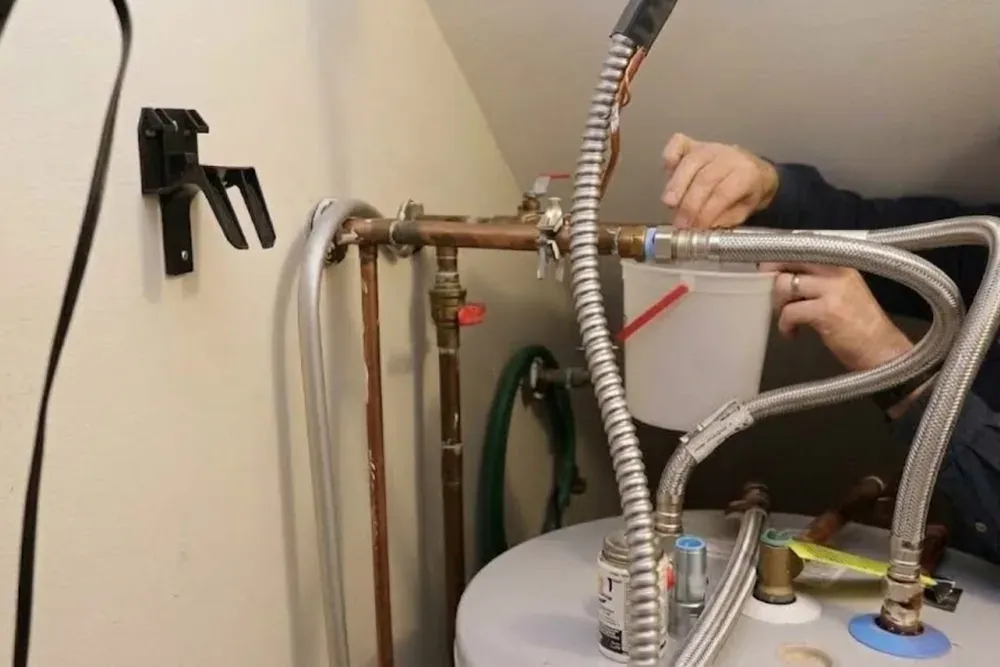
No hot water: what we check first.
A cold shower is the most common reason people call. The cause depends on the fuel. On a gas water heater, the pilot light, thermocouple or gas control valve is the first suspect. On an electric unit, it is a tripped breaker, a failed upper or lower heating element or a thermostat that stopped switching.
We confirm the supply first, then test the parts in the order they fail most often. That means no guessing and no new tank sold when a small part would have solved it.
If the water is lukewarm instead of cold, or runs hot for only a few minutes, the problem is usually a bottom element, a dip tube that has broken off or heavy sediment that blankets the burner.
Signs the heater needs repair now.
These symptoms point to a part that is failing or a tank that is about to.
- Water on the floor around the base, or rust stains running down the side of the tank..
- A pilot flame that goes out repeatedly, or a burner that burns yellow or orange..
- Rumbling or popping from the tank, which is sediment boiling at the bottom..
- Rust-colored hot water while the cold side runs clear..
- A relief valve discharging, or a breaker that trips every time the unit heats..
No hot water this morning? Call now and we will diagnose the unit before we quote any parts.
Call (855) 575-2890Repair or replace? A decision guide.
Our rule of thumb is simple. If a repair costs less than half of a new unit and the tank itself is sound, repair it.
| Problem. | Usually repairable? | Why. |
|---|---|---|
| Pilot out, thermocouple worn. | Yes. | A small part and a relight, if the burner and flue are sound. |
| Dead upper or lower element. | Yes. | Elements are replaceable and the tank is unaffected. |
| Leak at a fitting or relief valve. | Yes. | The tank is dry, only the connection or valve needs work. |
| Water leaking from the tank body. | No. | The steel has failed. See water heater replacement. |
| Heavy sediment and tank over about 10 to 12 years. | Sometimes. | Flushing helps, but the tank may be near end of life. |
Leaks: where the water is coming from matters.
Not every puddle means a dead tank. A loose supply line, a failed drain valve or a relief valve that is weeping from over-pressure are all repairable, and each looks the same to a worried homeowner.
We dry the tank and the fittings, then watch where the first drop forms. A leak from the tank seam means the heater is finished. A leak from a pipe connection or the drain valve means we can usually fix it on the first visit.
A water heater leak that has run for weeks can soak subfloor or rot the framing. If you smell mustiness near the unit, tell us so we check the floor as well.
Thermocouples, pilots and gas safety.
A thermocouple is a small safety sensor that proves the pilot is lit. When it weakens, the gas valve shuts off and the pilot goes out. Replacing it is a short job, and we also check that the flue is drawing and that the burner area is clean.
If you smell gas, do not touch switches or try to relight anything. Leave the building and call your gas utility or 911 first, then call us once you are safe.
Electric units have their own safety cutoff. A tripped high-limit reset can be a sign the thermostat is stuck on, which is why we test it before resetting.
How a water heater repair visit works.
Make it safe.
We shut off the fuel, cut the water if it is leaking and confirm there is no gas or electrical hazard around the unit.
Diagnose by test.
We use a meter on elements and thermostats, check gas pressure and flue draw, and look at the age marked on the data plate.
Quote before we work.
You get the cause, the repair option and the replacement option, with a clear price for each before any part is installed.
Repair, test and show you.
After the fix we run the unit through a heating cycle and show you the shutoff valves so you can use them next time.
Sediment, mineral scale and the Ross County aquifer.
Chillicothe's municipal water comes from groundwater drawn from the Teays Valley Aquifer. Groundwater carries dissolved minerals that settle as scale on heating elements and the tank floor over time. We can't quote a hardness figure for every street, so the practical test is to look inside the tank when we flush it.
Customers served by the Ross County Water Company outside the city have a published 2024 total hardness of 120 to 140 milligrams per liter, about 7 to 8 grains per gallon. That is moderately hard, enough to build scale on elements within a few years, so an annual flush is worth doing on those homes.
Scale is a leading reason an otherwise sound gas or electric heater rumbles, runs slowly or fails early.
Water heaters in older Chillicothe basements.
Many of Chillicothe's older houses have water heaters tucked into basements that also flood during heavy rain, because the city sits where the Scioto and Paint Creek meet. A heater sitting on the floor of such a basement can be damaged by water from outside as well as from inside.
If your basement has taken on water, do not relight or reset the heater until a plumber has checked the controls. Raising the unit onto a stand is a simple change that protects it, and we can do it during a repair.
What affects water heater repair pricing.
We give a clear price before parts are ordered or installed.
- Part and fuel type. Thermocouples, elements and gas valves have very different prices.
- Tank age. On an older tank we tell you if the money is better spent toward a new unit.
- Access and venting. Tight closets and long flue runs add time.
- Hour of the call.Ask about any call-out charge before you agree to a visit.
If the leak damaged flooring or drywall, photograph it before cleanup. Many homeowners policies cover sudden tank failure but not a slow leak that went unnoticed, so the date you first saw water matters to a claim.
Standards a heater repair follows.
A tank heater repair follows the manufacturer's installation and service manual first, then the Ohio Plumbing Code (based on the International Plumbing Code, IPC) for relief valves and discharge piping. On gas units, combustion air and venting follow the NFPA 54 National Fuel Gas Code. We cite these so you can ask any contractor the same question.
Water heater repair questions answered.
.
Whether water heater emergencies can be handled in the evening or on a weekend is confirmed when you call (855) 575-2890, and it is not promised in advance. Describe what is happening and ask what can be arranged. Meanwhile, turn the unit's gas or power to off and close its cold-water inlet valve.
.
On a gas unit the thermostat or the gas control valve may not be calling for heat, or the burner assembly is clogged. On an electric unit, a failed element or a tripped high-limit switch is likely. A quick meter test separates them.
.
No. Leaks at the cold inlet, the hot outlet, the drain valve and the relief valve are repairable. Leaks from the tank body are not, because the steel has corroded through.
The water around the base can come from any of these, so we trace the first drip before telling you what it will take.
.
Tank units commonly last roughly 8 to 12 years, depending on water quality, sediment and maintenance. The data plate near the top lists the manufacture date in the serial number.
.
Yes, including descale and flush service. See our tankless water heater page for what that visit covers.