
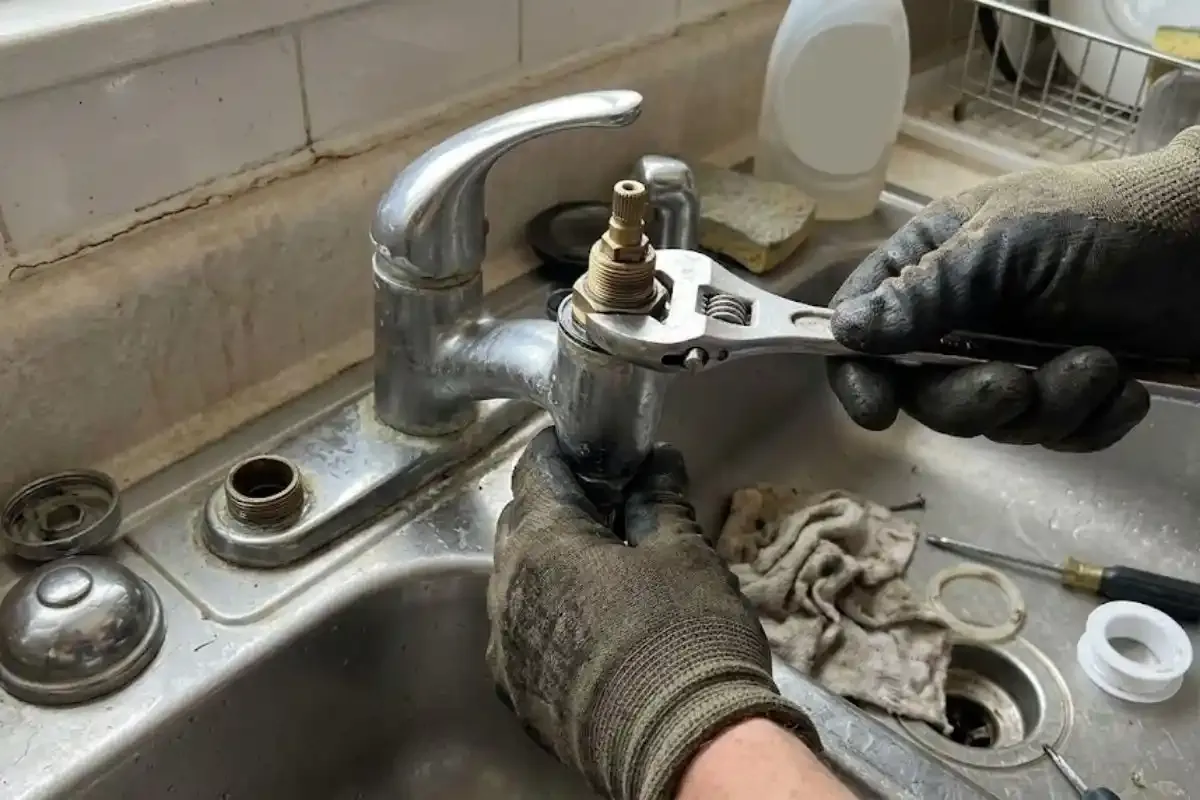
A faucet that will not stop is an emergency.
A dripping faucet wastes water slowly. A faucet that will not close, a handle that breaks off or a supply line that bursts under pressure is a flood. The valves under a sink are often old and can fail when touched, which is why we ask you to try them gently.
If a handle is spinning loose, the stem or cartridge inside has failed. Closing the stop valves beneath the fixture will stop the flow while you wait.
If the stop valves themselves do not close, shut the main and call. We replace failed stop valves as part of the visit so the next repair is easier.
Faucet types and what goes wrong.
Knowing your faucet type helps predict the repair.
| Type. | Common failure. | Repair. |
|---|---|---|
| Compression (two handles). | Worn rubber washers and seats. | Replace washers, resurface seats. |
| Cartridge. | Worn O-rings or cartridge. | Replace the cartridge. |
| Ball (single handle). | Worn seals and springs. | Replace the rebuild kit. |
| Ceramic disc. | Scale or damaged discs. | Clean or replace the cartridge. |
| Pull-down or touchless. | Hose leaks or sensor faults. | Replace hose, solenoid or unit. |
Faucet or supply valve gushing? Shut the main and call. Call and we talk it through.
Call (855) 575-2890Failed supply lines and angle stops.
The braided supply lines under sinks are rated for years, not decades. A line that is kinked, corroded at the nut or bulging at the crimp can fail without warning. We replace both lines when we replace a faucet.
Angle stops that have not been turned in years are a leading cause of surprise leaks. They can seize or drip from the stem when moved. If yours do, replacing them gives you a reliable shutoff for the next emergency.
Supply valves that burst or break are a common source of urgent calls. Closing the main stops the flow until we get there.
Bathtub and shower faucet repair.
A tub spout that drips after the shower is turned off, a shower that will not go hot or cold, or a valve that leaks inside the wall are common calls. The cause is usually a worn cartridge, a damaged seat or mineral scale.
We can often replace the cartridge from the front without opening the wall. If the valve body itself is damaged or corroded, access from behind may be needed. A shower that leaks behind the wall can stain the ceiling below, so tell us if you see a stain.
If a tub faucet will not shut off at all, close the main and call. A faucet stuck open is a flood risk.
How a faucet repair visit works.
Shut off and inspect.
We close the stops, remove the handle and look at the cartridge, seat and supply lines.
Repair or replace.
A cartridge or washer swap is quick. If the faucet body is corroded or parts are no longer made, we recommend a new fixture.
Replace the supply parts.
New braided lines and, where needed, new stop valves go in so the fixture has a fresh base.
Test and clean.
We run hot and cold water, check under the sink for drips and wipe down the work area.
Repair or replace the fixture.
If a faucet is a few years old and the part is available, repair is usually cheaper. If it is older, pitted or the finish is peeling, a new faucet costs little more than repeated repairs.
You can supply a faucet or we can suggest one that fits your sink holes. We check the hole count and spacing before we buy anything.
For kitchens, we also check the connection to the disposal and dishwasher so the new faucet does not disturb them.
Hard water and faucets in Ross County.
The Ross County Water Company reports a total hardness of 120 to 140 milligrams per liter for the water it supplies outside the city, which is about 7 to 8 grains per gallon. That level leaves white scale on aerators and inside cartridges, and it is the most common cause of a faucet that sputters or a handle that gets stiff.
City of Chillicothe customers should test their tap, since hardness varies by supply. If you see scale, soaking the aerator in vinegar often restores flow. A whole-house treatment is another option on our water softener and filtration page.
What affects faucet repair pricing.
We give a clear price before work begins.
- Repair or replacement. Cartridge repairs cost less than new fixtures.
- Fixture type. Touchless and designer fixtures carry higher parts costs.
- Condition of valves and lines. Seized stops or corroded lines add scope.
- Hour of the call.Ask about any call-out charge before you agree to a visit.
A failed supply line that flooded a cabinet can ruin flooring and drywall. Take photos and ask your insurer about covered water damage, which usually includes sudden failures.
Lead and flow standards.
Faucets sold for drinking water use must meet the federal lead-free definition and are tested to the NSF/ANSI 61 and NSF/ANSI 372 standards. EPA WaterSense sets a flow target of 1.5 gallons per minute for bathroom sink faucets. Both matter when you choose between repairing an old faucet and replacing it.
Faucet repair questions answered.
.
Whether faucet emergencies can be handled in the evening or on a weekend is confirmed when you call (855) 575-2890, and it is not promised in advance. Describe what is happening and ask what can be arranged. Meanwhile, close the nearest shutoff valve or the main water valve.
.
A worn washer, seat or cartridge. It is one of the most common repairs and often a same-visit fix.
.
The mixing cartridge may be worn or blocked with scale. It is usually a cartridge replacement, not a new valve.
If the problem is only in one shower, the heater is not the cause.
.
If the parts are available and the body is sound, yes. If it is corroded, pitted or has been repaired repeatedly, a new faucet is better value.
.
Yes. We recommend it when we replace a faucet, since old stops often fail when disturbed.