
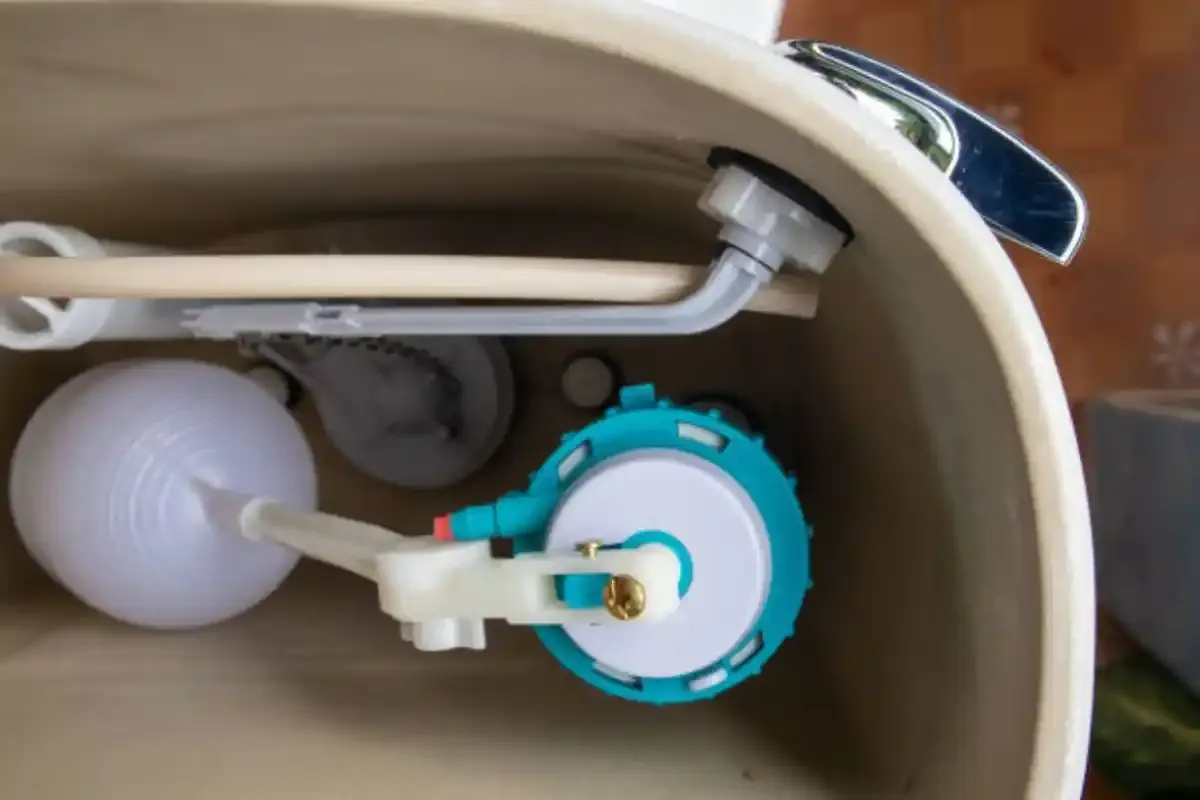
When a toilet overflow is an emergency.
A single clog that you can plunge is a nuisance. A toilet that overflows and keeps rising is a flood in the making, particularly on an upper floor where the water goes through the ceiling below.
Stop the refill, then use a flange plunger and push steadily rather than hard. If the water level does not fall within a few plunges, or other fixtures also back up, stop and call. A single toilet with a clog in the trap is a short cable job. Multiple fixtures point to the main line, which is a drain cleaning problem.
Please do not add dish soap, hot water or a chemical product to a full bowl. It does not help a real clog and can make a mess.
Toilet problems and the usual cause.
Most toilet calls come down to a short list.
| Symptom. | Likely cause. | Typical fix. |
|---|---|---|
| Runs after flushing. | Worn flapper or fill valve. | Replace the flapper or fill valve. |
| Weak flush. | Partial clog, clogged rim jets or low tank level. | Clear the trap, clean jets, adjust water level. |
| Water at the base. | Failed wax ring or loose closet bolts. | Reset the toilet with a new seal. |
| Rocking bowl. | Loose bolts or a damaged flange. | Tighten bolts or repair the flange. |
| Tank sweats or drips. | Condensation or a failed tank bolt gasket. | Replace gaskets, check supply line. |
| Gurgles or bubbles. | Vent problem or partial main line blockage. | Cable the line and check venting. |
Toilet overflowing right now? Shut the valve behind it and call. Call and we talk it through.
Call (855) 575-2890Running toilets and high water bills.
A toilet that runs can waste hundreds of gallons a day and often does so silently. A flapper that does not seal lets water leak slowly into the bowl.
Add a few drops of food coloring to the tank and wait ten minutes without flushing. If color shows in the bowl, the flapper is leaking. If your bill has jumped, this is the first test, before looking for a buried line leak with our leak detection service.
Replacing a flapper and fill valve is a short repair that pays for itself quickly.
Leaks at the base and the wax ring.
Water around the base of a toilet can come from three places: the tank, the supply line or the seal between the toilet and the flange. We dry everything and watch to see where the first drop forms.
A failed wax ring, or a modern wax-free seal, lets sewer gas and water escape. Left alone, it rots the subfloor. When we reset a toilet we also inspect the flange, since a broken or low flange keeps the new seal from working.
A soft spot in the bathroom floor near the toilet means the damage is already in the subfloor and we should look at it before reinstalling.
Installing a new toilet.
Pick the right size.
We check the rough-in distance from the wall to the drain flange, usually 12 inches, and the height and bowl shape that suit the household.
Remove the old unit.
We shut off and disconnect the supply, remove the toilet, and clean the flange surface.
Repair the flange if needed.
A cracked or corroded flange gets a repair ring or replacement so the new toilet sits level and tight.
Set, seal and test.
We set the new bowl on a new seal, tighten the bolts evenly, connect a new supply line and flush several times to check for leaks.
Choosing a toilet that will not clog.
Look at the flush mechanism and trapway, not just the price. A two-inch glazed trapway and a good gravity flush handle waste better than a low-water model with a narrow path.
We install toilets you supply or recommend one from what we see. If your toilet is older than the 1990s, it may use more water than a modern one and cost more on your bill in the long run.
Toilets and the Chillicothe water supply.
Groundwater from the Teays aquifer supplies Chillicothe, and minerals in groundwater leave scale in tank fittings and in the rim jets of a bowl. A toilet with hard water scale flushes more weakly even without a clog.
If you see white crust at the fill valve or orange stains at the waterline, tell us. Cleaning the jets and replacing the fill valve may restore the flush without a new toilet.
What affects toilet repair pricing.
We quote before we begin.
- The fix. Flappers and fill valves are quick. Flange repairs and floor repair take longer.
- The unit. New toilets range from basic to comfort height with specialty features.
- Access. Second-floor toilets with a leak below need care.
- Hour of the call.Ask about any call-out charge before you agree to a visit.
If an overflow damaged a ceiling or floor, photograph it. Most homeowners policies cover sudden overflow damage but not wear and seepage over time.
Standards behind toilet parts.
Current toilets in the United States are limited to 1.6 gallons per flush by federal rule, and WaterSense-labeled models use 1.28 gallons or less under the EPA WaterSense program. That matters for repairs because older flush valves, flappers and fill valves are matched to the tank design, so a part from the wrong family can leak or run.
Toilet repair questions answered.
.
Whether toilet emergencies can be handled in the evening or on a weekend is confirmed when you call (855) 575-2890, and it is not promised in advance. Describe what is happening and ask what can be arranged. Meanwhile, close the supply valve behind the toilet and do not flush again.
.
Usually a worn flapper, a misadjusted fill valve or a chain that is too short or too long. It is one of the simplest repairs we do.
.
Yes, with a flange plunger rather than a flat cup one. Seal the drain opening and push gently.
If the level does not fall after a few attempts, stop. Forcing it may push the clog deeper.
.
The bolts are loose, the floor is uneven or the flange is damaged. We check all three, since a rocking toilet will eventually fail its seal.
.
Yes, as long as it fits the rough-in. We check the size first and tell you if a different model suits the space better.