
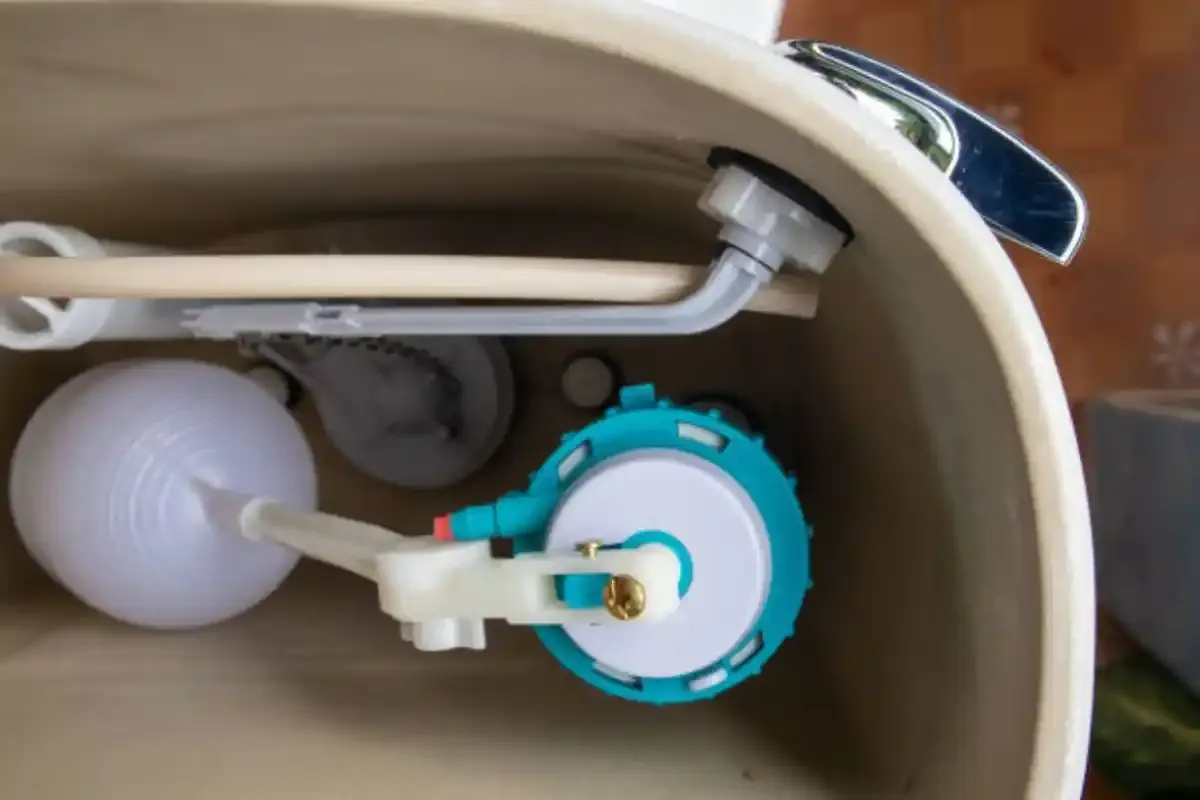
Why the second flush is the wrong move.
A toilet tank holds about a gallon and a half or more, depending on the model. If the trap is blocked, that water has nowhere to go but over the rim. The first flush made the bowl fill. The second adds more.
Watch the water level. If it is dropping slowly, wait. If it is steady, the clog is holding. If it is rising, close the valve.
The first minute.
Take the lid off the tank.
Look at the water level and the flapper. You may need to push the flapper down to stop the refill.
Close the supply valve.
Turn the small valve behind the toilet clockwise to stop water entering the tank.
Watch the bowl.
If it drops to its normal level, you may only have a slow drain. If not, the clog is complete.
Grab a flange plunger.
A flange plunger seals better than a flat cup one. Push slowly first.
Decide.
If several pushes do not clear it, stop and read the next section.
Bowl rising? Close the valve behind the toilet and call. Call and we talk through what is happening.
Call (855) 575-2890Is it just the toilet?
This table separates a toilet clog from a drain problem.
| What else happens. | Where the clog is. | What to do. |
|---|---|---|
| Only this toilet is slow. | In the toilet trap or its short branch. | Plunge, then use a closet auger. |
| The tub gurgles or fills when you flush. | In the branch or main line. | Stop flushing. See drain cleaning. |
| A basement floor drain rises. | In the main sewer line. | Stop using water. See sewer line cleaning. |
| Every few weeks, same toilet. | A worn toilet, a bellied pipe or scale. | See toilet repair. |
Cases where waiting helps.
A slow flush with a bowl that is dropping on its own often clears after a few minutes. Paper can swell and then soften, and a blockage can shift as water works on it.
Waiting five or ten minutes before trying again costs nothing. If the level has fallen, a gentle plunge or a normal flush may now work.
What a repeated clog means.
A toilet that clogs once a month has a reason. The usual ones are a weak flush from a toilet with scale in its rim jets, a partly blocked trapway or a drain line with a sag that collects solids.
Wipes and thick paper are a leading cause. Even wipes marked flushable can cause a clog in an old drain. Keep them out of the toilet.
When to call a plumber.
Call if the toilet overflows, if more than one fixture is slow, if sewage smells or if you have plunged without success. A camera shows whether the problem is in the toilet or the line.
We handle both. Our toilet repair page and drain cleaning page explain the visit.
Cleaning up safely.
If water has overflowed, wear gloves and boots, remove the water with towels and a wet vac and disinfect hard surfaces. Dry carpets and drywall quickly, or remove wet material.
Wash your hands well afterward. If sewage reached a finished room, treat it as contaminated.
Teaching the household the first-minute rules.
Everyone in the house should know where the valve behind the toilet is and how to close it. Show children and guests the one thing to do if the bowl rises: turn the valve and call you.
Keep a plunger, rubber gloves and a few towels in the bathroom. A calm response in the first minute turns a flood into a small cleanup.
Older toilets and newer pipes.
A toilet from before the mid 1990s often uses more water per flush, which is why older toilets sometimes clear a clog on the first try and newer low-flow models struggle. A newer model with a good trapway and a pressure assist can do better than either.
If your house has a mix of cast iron, clay and plastic drain, rough interior surfaces catch paper and wipes. That is a reason to keep wipes out of the bowl and to have a camera look at a line that clogs often.
Why not use a chemical cleaner.
Caustic cleaners in a standing bowl can splash back when you plunge, and they attack the wax seal and metal parts. They also leave a hazard for the plumber who arrives next. A plunger, an auger and patience are safer and work better.
Signs the problem is bigger than one toilet.
Notice what else the house is doing. A gurgle in a nearby drain, water in a basement floor drain or a slow shower all suggest the line beyond the toilet is blocked. In that case a plunger will not help, and every extra flush sends water to the lowest fixture in the house.
Why the bowl behaves this way.
Toilets are tested to the ASME A112.19.2 standard, and the trapway is made narrow on purpose. EPA WaterSense models use 1.28 gallons per flush or less. Because the tank holds a fixed volume, a second flush onto a blockage has nowhere to go but the floor, which is why the better move is to stop and check the water level.
Flushing costs more in Kingston and rural Ross County this year.
The Village of Kingston's website says that, starting January 1, 2026, monthly water bills rise because the Ross County Water Company is raising the rates the village pays for its water. A toilet that is flushed repeatedly, or one that keeps running after a clog is cleared, adds to a bill that is already higher.
Homes in the village and the country around it also may not be on a municipal sewer. Where a septic system is in place, repeated flushing of a clogged toilet can push extra water into the tank and field. See our Kingston page for how we handle calls there, and ask your county health district about septic rules at your address.
Flushing questions from Chillicothe homeowners.
.
It can. If the level is not dropping, the tank's water has nowhere to go. Close the valve behind the toilet first.
.
Five to ten minutes if the level is dropping slowly.
If the level is steady or rising, do not flush.
.
Yes, once the bowl is draining. Flush once. If it backs up, stop.
.
A one-time clog does not. Repeated flushing adds water to the tank, so avoid it.
.
Whether toilets can be handled in the evening or on a weekend is confirmed when you call (855) 575-2890, and it is not promised in advance. Describe what is happening and ask what can be arranged. Meanwhile, close the supply valve behind the toilet and do not flush again.