
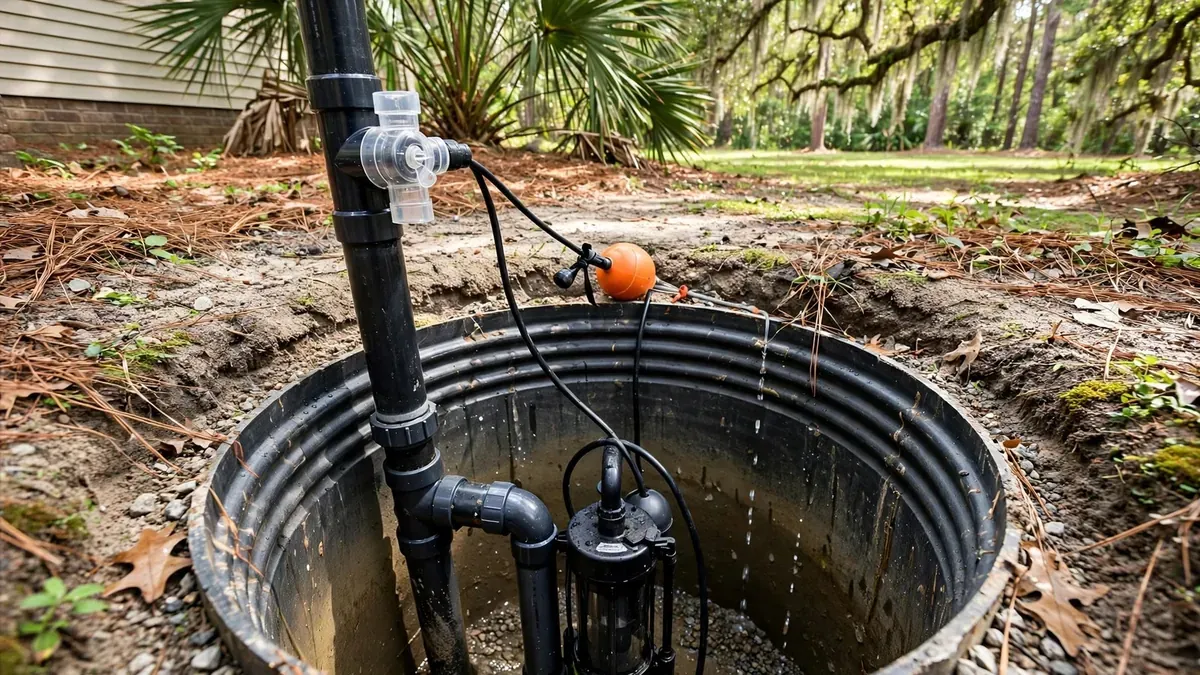
Why a sump pump fails, and when.
Pumps fail when you need them most, because heavy rain is when they run hardest. The common causes are a stuck float switch, a clogged intake, a burned motor, a failed check valve or a power outage.
A pump that cycles constantly, runs without pumping or makes a grinding noise is telling you something. A pump that is older than about 7 to 10 years is on borrowed time.
Test yours by pouring a bucket of water into the pit. The float should lift, the pump should start and the water should drop and stop.
Symptoms and what they mean.
Use this to describe the problem when you call.
| Symptom. | Likely cause. | Typical fix. |
|---|---|---|
| Pump will not start, water rising. | Float stuck, no power or dead motor. | Free the float, reset the breaker, replace pump. |
| Runs but pit does not empty. | Clogged intake or failed check valve. | Clean the intake, replace the valve. |
| Runs constantly. | Stuck float, no check valve or high groundwater. | Reposition the float, add a check valve, review drainage. |
| Loud grinding or rattling. | Debris or worn bearings. | Remove debris, replace pump. |
| Discharge freezes in winter. | Outdoor line without slope or protection. | Reroute the discharge, add a relief. |
Basement taking on water? Stay clear of outlets and call. Call and we talk it through.
Call (855) 575-2890Battery backup and water-powered backups.
A battery backup pump runs when the power goes out, which is often during a storm. It sits beside or above the main pump in the pit, and charges from the house. A water-powered backup uses municipal water pressure, so it is not an option where your water comes from a private well.
Backups need testing and, for batteries, replacement every few years. We add an alarm so you know if water rises.
Installing a new sump system.
Assess the pit.
We check the basin depth, the lid, the drain tile inlets and the discharge route.
Choose the pump.
A submersible pump with a cast iron or thermoplastic body suits most homes. We size to the inflow.
Set the check valve and discharge.
A check valve stops water from flowing back into the pit. The discharge pipe should drain away from the foundation.
Test and alarm.
We fill the pit to cycle the pump and test the backup and alarm.
Where the discharge should go.
Sump water should be sent away from the foundation and not into the sanitary sewer, which is prohibited in many places. We route the discharge to a safe location and tell you about local rules.
In winter, a discharge pipe that ends at the surface can freeze. A pipe that slopes away and ends in an area where water can spread keeps flowing.
Sump pumps and basement waterproofing.
A pump manages water that gets in. It does not stop the cause. If your pit fills every storm, the pump works hard and the basement remains at risk. See our basement waterproofing page for interior drainage options that bring water to the pit more evenly.
Sump pumps in the Scioto valley.
Chillicothe lies between the Scioto River and Paint Creek, and the 1913 flood put roughly 70 percent of the city under water. Levees now protect the city, but groundwater rises with the rivers and basements near the bottoms feel it.
A pump discharging to the yard can overload if river levels are high, because ground near the discharge is already saturated. Backup power and a second pump matter more here than in drier places.
What affects sump pump pricing.
We quote before we start.
- Repair or replacement. A float or check valve costs less than a new pump.
- Pump type and horsepower. Higher flow and cast iron bodies cost more.
- Backup system. A battery or water-powered backup adds cost.
- Plumbing and electrical work. A new pit or a dedicated circuit adds scope.
Flood damage and sump failure are often handled differently by insurers. Ask whether your policy covers water backup or sump overflow, and keep photos of the pit and the damage.
Electrical safety around sump pumps.
A sump pump sits in water and runs on household current, so it should be on a ground-fault circuit as the National Electrical Code (NEC), NFPA 70, requires for damp locations. Never stand in water to reach a pump or its cord. If the basement is flooded, shut off power at the panel from a dry spot, or call the utility. Homes on sloped lots, such as those in Hesswood Hills, are a good reason to check the pump before the rainy season.
Sump pump questions answered.
.
Whether sump pump emergencies can be handled in the evening or on a weekend is confirmed when you call (855) 575-2890, and it is not promised in advance. Describe what is happening and ask what can be arranged. Meanwhile, keep electricity away from standing water and move belongings off the floor.
.
Many last 7 to 10 years. If yours is older, or cycles constantly, plan a replacement before the next storm.
.
If your basement floods when the power fails, yes. Storms that bring heavy rain often cause outages.
Backups also protect when the main pump fails.
.
Groundwater can be high after wet weeks, or the check valve may be letting water run back. We check both.
.
Usually not. Sending groundwater into the sanitary sewer is prohibited in many places. We route it outdoors.