
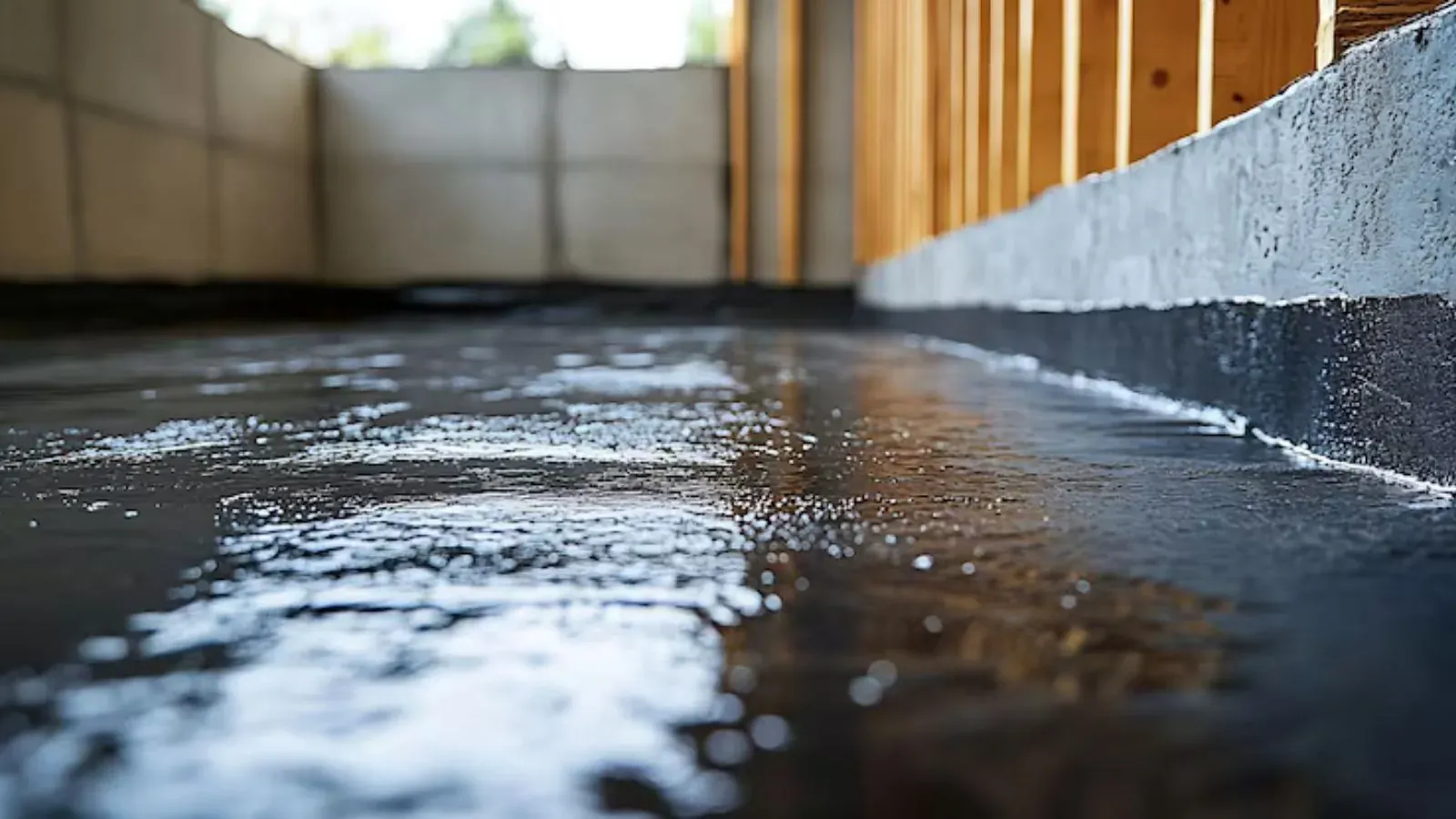
How water gets into a basement.
Groundwater presses on the foundation wall and the floor slab. It enters through cracks, through the joint where the wall meets the floor and through porous block or concrete. When the water table rises after heavy rain or snowmelt, pressure increases and water finds the weak spots.
Surface water adds to it. Roof runoff that drops beside the foundation, soil that slopes toward the house and clogged gutters all send water down the wall.
A third source is plumbing. A leaking supply or drain line can look like groundwater. A leak detection check rules it out.
How an interior drain system is built.
Cut the floor edge.
A strip of the concrete floor is cut along the wall and removed to expose the footing.
Lay the drain.
A perforated pipe is laid in clean stone beside the footing, sloped toward a sump basin.
Install the sump basin and pump.
A pit is set into the floor with a pump, check valve and discharge line. See sump pump service.
Add a vapor barrier on the wall.
A sheet or panel along the wall lets seeping water flow down to the drain.
Patch the floor.
New concrete is poured over the drain and finished flush with the floor.
Water coming through the wall or floor? Call and we will assess the source first.
Call (855) 575-2890What each approach fixes.
Match the fix to the source of water.
| Problem. | Best fix. | Not a fix. |
|---|---|---|
| Water seeping at the wall-floor joint. | Interior perimeter drain with sump. | Wall sealer alone. |
| Single leaking crack in a poured wall. | Crack injection. | A drain for a single crack. |
| Roof or surface runoff. | Gutters, downspout extensions, grading. | Interior drain as a first step. |
| High humidity, no liquid water. | Dehumidifier, ventilation. | Waterproofing. |
| A leaking supply or drain line. | Plumbing repair. | Any waterproofing system. |
Sealers, coatings and why they often fail.
A paint-on waterproof coating on the inside of a wall holds back moisture vapor, but it does not resist water pressure from outside. Under pressure the coating blisters and peels, and the water behind it has nowhere to go.
Sealers have a role in reducing dampness where there is no active leak. For a wall that weeps after rain, a drain system does the real work. We say plainly when a coating is not enough.
What to fix before you pay for a drain system.
Extend downspouts several feet from the house, clean the gutters and make sure the soil slopes away from the wall. These steps cost little and often reduce water entry substantially.
Check window wells for debris and standing water. Check the dryer vent and the bathroom exhaust, since condensation inside a basement can mimic a leak.
If water still comes in after those steps, interior drainage is the next layer.
Living with the system.
An interior system depends on its pump. The pump needs a dedicated circuit, a check valve and ideally a battery backup. Test it each spring and fall by pouring a bucket of water into the pit.
After a drain system goes in, the basement dries over several weeks. Run a dehumidifier. Mold that formed before the work needs cleaning separately.
Questions to ask any waterproofing contractor.
Ask what the contractor believes is causing the water and how they know. A good answer refers to cracks, the wall-floor joint, grading or runoff, not a generic product.
Ask where the water will go. A drain that fills a pit needs a pump, a discharge line and a place for the water to land that is not near your foundation.
Ask what is covered if the pump fails during a storm, and whether a backup is included or optional.
Timing the work around the seasons.
Interior drain work is done year round because it happens inside, but planning matters. The best time to assess a basement is during or just after a wet spell, when the water is visible and the walls show where it enters.
Photograph the wet spots and note the date and the weather. Those notes help a contractor see whether the problem follows rain, snowmelt or a rising river, and they keep the quote tied to what is actually happening in your house.
After installation, watch the first big storm. A working system should move water to the pit and out without any reaching the floor.
Finishing a basement after waterproofing.
Wait until the basement has stayed dry through at least one wet season before you build walls or lay flooring. Use materials that tolerate moisture, and leave an access point to the sump pit and cleanouts.
Groundwater, the 1913 flood and Chillicothe basements.
Chillicothe sits where the Scioto River meets Paint Creek. The Midwestern Regional Climate Center's account of the March 1913 flood describes the Scioto cresting near 40 feet, about 70 percent of the city flooded, 18 people reported dead and a levee failing before dawn. It adds that a series of levees built along the south bank of the Scioto is now certified to protect the city from a flood equal to that of 1913.
Levees keep river water out of the streets. They do not lower the groundwater under your house, which rises and falls with the river and the rain. That is why basements near the rivers can still seep in a wet season, and why a drain and pump system is the usual remedy. Homes in higher villages such as Kingston face surface runoff more than river-driven groundwater. See our basement waterproofing page for how we assess a house.
Waterproofing questions from Chillicothe homeowners.
.
The levees are certified for a flood equal to 1913's, according to the regional climate center's account. They address river flooding of streets. Groundwater under a house still rises with the water table.
.
Exterior work keeps water off the wall but requires excavation along the foundation. Interior systems manage water after it arrives.
For most finished homes, interior is more practical.
.
It controls liquid water. Humidity may remain, so run a dehumidifier.
.
Water that appears after rain points to groundwater or runoff. Water that appears with no rain may be plumbing.
.
Whether basements can be handled in the evening or on a weekend is confirmed when you call (855) 575-2890, and it is not promised in advance. Describe what is happening and ask what can be arranged. Meanwhile, keep electricity away from standing water and move belongings off the floor.